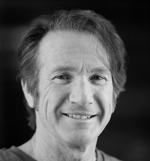
Steven Z. Rapcsak, MD
Professor of Neurology, Psychology, and Speech, Language, and Hearing Sciences
Chief, Neurology Section, Southern Arizona VA Health Care System, Tucson AZ
Education/Training:
- MD: Medical School of Szeged, Hungary, 1978
- Residency (Psychiatry): Beth Israel
Hospital / Mt. Sinai Medical School, 1979-82
- Residency (Neurology): Albert Einstein
College of Medicine, 1982-85
- Fellowship (Behavioral Neurology):
University of Florida at Gainesville, 1985-86
- Board Certification: Neurology, American Board of
Psychiatry and Neurology
Clinical/Research Interests:
Behavioral Neurology, Disorders of Spoken and Written Language (Aphasia/Alexia/Agraphia), Face Recognition Memory, Executive Function, Alzheimer's Disease, Dementia
Selected Publications:
- Rapcsak, SZ, Gonzalez-Rothi, LJ, & Heilman, KM. (1987). Apraxia in a patient with atypical cerebral dominance. Brain and Cognition, 6:450-463.
- Rapcsak, SZ, Rothi, LJG, & Heilman, KM. (1987). Phonological alexia with optic and tactile anomia: a neuropsychological and anatomical study. Brain and Language, 31:109-121.
- Rapcsak, SZ, Watson, RT, & Heilman, KM. (1987). Hemispace-visual field interactions in visual extinction. Journal of Neurology, Neurosurgery and Psychiatry, 50:1117-1124.
- Rapcsak, SZ, Arthur, S, & Rubens, AB. (1988). Lexical agraphia from focal lesion of the left precentral gyrus. Neurology, 38:1119-1123.
- Rapcsak, SZ, Verfaellie, M, Fleet, WS, & Heilman, KM. (1989). Selective attention in hemispatial neglect. Archives of Neurology, 46:178-182.
- Rapcsak, SZ, Arthur, S, Bliklen, D, & Rubens, AB. (1989). Lexical agraphia in Alzheimer's disease. Archives of Neurology, 46:65-68.
- Rapcsak, SZ, Croswell, S, & Rubens, AB. (1989). Apraxia in Alzheimer's disease. Neurology, 39:664-668.
- Rapcsak, SZ, Kaszniak, AW, &Rubens, AB. (1989). Anomia for facial expressions: evidence for a category specific visual-verbal disconnection syndrome. Neuropsychologia, 27:1031-1041.
- Rapcsak, SZ, Krupp, LB, Rubens, AB, & Reim, J. (1990). Mixed transcortical aphasia without anatomical isolation of the speech area. Stroke, 21:953-956.
- Rapcsak, SZ, & Rubens, AB. (1990). Disruption of semantic influence on writing following a left prefrontal lesion. Brain and Language, 38:334-344.
- Rapcsak, SZ, Rubens, AB, & Laguna, JF. (1990). From letters to words: procedures for word recognition in letter-by-letter reading. Brain and Language, 38:504-514.
- Rapcsak, SZ, Beeson, PM, & Rubens, AB. (1991). Writing with the right hemisphere. Brain and Language, 41:510-530.
- Rapcsak, SZ, Comer, JF, & Rubens, AB. (1993). Anomia for facial expressions: neuropsychological mechanisms and anatomical correlates. Brain and Language, 45:233-252.
- Rapcsak, SZ, Ochipa, C, Beeson, PM, & Rubens, AB. (1993). Praxis and the right hemisphere. Brain and Cognition, 1993, 23:181-202.
- Rapcsak, SZ, Polster, MR, Comer, JF, & Rubens, AB. (1994). False recognition and misidentification of faces following right hemisphere damage. Cortex, 30:565-583.
- Rapcsak, SZ, Ochipa, C, Anderson, KC, & Poizner, H. (1995). Progressive ideomotor apraxia: evidence for a selective impairment of the action production system. Brain and Cognition, 27: 213-236.
- Rapcsak, SZ, Polster, M, Glisky, MA, & Comer, JF. (1996). False recognition of unfamiliar faces following right hemisphere damage: neuropsychological and anatomical observations. Cortex, 32:593-611.
- Rapcsak, SZ, Kaszniak, AW, Reminger, SL, Glisky, ML, Glisky, EL, & Comer, JF. (1998). Dissociation between verbal and autonomic measures of recognition memory following frontal lobe damage. Neurology, 50:1259-1265.
- Rapcsak, SZ, Reminger, SL, Glisky, EL, Kaszniak, AW, & Comer, JF. (1999). Neuropsychological mechanisms of false facial recognition following frontal lobe damage. Cognitive Neuropsychology, 16:267-292.
- Rapcsak, SZ, Nielsen, L, Littrell, L, Glisky, EL, Kaszniak, AW, & Laguna, JF. (2001). Face memory impairments in patients with frontal lobe damage. Neurology, 57:1168-1175.
- Rapcsak, SZ. (2003). Face memory and its disorders. Current Neurology and Neuroscience Reports, 3:494-501.
- Rapcsak, SZ, & Beeson, PM. (2004). The role of the left posterior inferior temporal cortex in spelling. Neurology, 62:2221-2229.
- Antonucci, SM, Beeson, PM, & Rapcsak, SZ. (2004). Anomia in patients with left inferior temporal lobe lesions. Aphasiology, 2004, 18:543-554.
- Davidson, P, Cook, S, Glisky, EL, Verfaellie, M, & Rapcsak, SZ. (2005). Source memory in the real world: a neuropsychological study of flashbulb memory. Journal of Clinical and Experimental Neuropsychology, 27:915-929.
- Pannu, J, Kaszniak, AW, & Rapcsak, SZ. (2005). Metamemory for faces following frontal lobe damage. Journal of the International Neuropsychological Society, 11:668-676.
- Henry, ML, Beeson, PM, Stark, AJ, & Rapcsak, SZ. (2007). The role of left perisylvian cortical regions in spelling. Brain and Language, 100:44-52.
- Rapcsak, SZ, Henry, ML, Sommer, T, Carnahan, SD, & Beeson, PM. (2007). Do dual-route models accurately predict reading and spelling performance in individuals with acquired alexia and agraphia? Neuropsychologia, 45:2519-2524.
- Antonucci, SA, Beeson, PM, Labiner, D, & Rapcsak, SZ. (2008). Naming and semantic knowledge in patients with left inferior temporal lobe lesions. Aphasiology, 22:281-304.
- Beeson, PM, Rising, K, Kim, ES, & Rapcsak, SZ. (2008). A novel method for examining response to spelling treatment. Aphasiology, 22:707-717.
- Henry, ML, Beeson, PM, & Rapcsak, SZ. (2008). Treatment for lexical retrieval in progressive aphasia. Aphasiology, 22:826-838.
- Henry, ML, Beeson, PM, & Rapcsak, SZ. (2008). Treatment for anomia in semantic dementia. Seminars in Speech and Language, 29:60-70.
- Rapcsak, SZ, Beeson, PM, Henry, ML, Leyden, A, Kim, ES, Rising, K, Andersen, S & Cho, H. (2009). Phonological dyslexia and dysgraphia: cognitive mechanisms and neural substrates. Cortex, 45:575-591.
- Caselli, RJ, Dueck, AC, Osborne, D, Sabbagh, MN, Connor, DJ, Ahern, GL, Baxter, LC, Rapcsak, SZ, et al. (2009). Longitudinal growth modeling of cognitive aging and the APOE e4 effect. New England Journal of Medicine, 361:255-263.
- Beeson, PM, Rising, K, Kim, ES, & Rapcsak, SZ. (2010). A treatment sequence for phonological dyslexia/dysgraphia. Journal of Speech, Language, and Hearing Research, 53:450-468.
- Andersen, SM, Rapcsak SZ, & Beeson, PM. (2010). Cost function masking during normalization of brains with focal lesions: still a necessity? NeuroImage, 53:78-84. NIHMS210168
- Caselli, RJ, Dueck, AC, Locke, DEC, Sabbagh, MN, Ahern, GL, Rapcsak, SZ, et al. (2011). Cerebrovascular risk factors influence age-related memory decline in APOE e4 carriers. Neurology, 76:1078-1084.
- Caselli, RJ, Dueck, AC, Lock, DEC, Hoffman-Snyder, CR, Woodruff, BK, Rapcsak, SZ, & Reiman, E.M. (2011). Longitudinal modeling of frontal cognition in APOE e4 homozygotes, heterozygotes, and noncarriers. Neurology, 76:1383-1388.
- Rapcsak, SZ, & Edmonds, EC. (2011). The executive control of face memory. Behavioral Neurology, 24:285-298.
- Edmonds, EC, Glisky, EL, Bartlett, JC, & Rapcsak, SZ. (2011). Cognitive mechanisms of false facial recognition in older adults. Psychology and Aging, in press.
- Beeson, PM, King, RM, Bonakdarpour, B, Henry, ML, Cho, H, & Rapcsak, SZ (2011). Positive effects of language treatment for the logopenic variant of primary progressive aphasia. Journal of Molecular Neuroscience, 45:724-736.
- Henry, ML, Beeson, PM, Alexander, GE, & Rapcsak, SZ (2011). Written language impairments in progressive aphasia: a reflection of damage to semantic and phonological processes. Journal of Cognitive Neuroscience, in press.
- Kim, ES, Rapcsak, SZ, Andersen, S, & Beeson, PM. (2011). Multimodal alexia: neuropsychological mechanisms and implications for treatment. Neuropsychologia, 49:3551-3562.
Related Links:
The University of Arizona Department of Neurology
1501 N. Campbell Avenue, PO Box 245023
Tucson, AZ 85724-5023
Phone:
Fax:
(520) 626 4551
(520) 626-2111
All contents copyright © 2013 Arizona Board of Regents.
The University of Arizona is an EEO/AA - M/W/D/V Employer.